
Resources / Article
The Best Strength Training Plan After 40 for Beginners
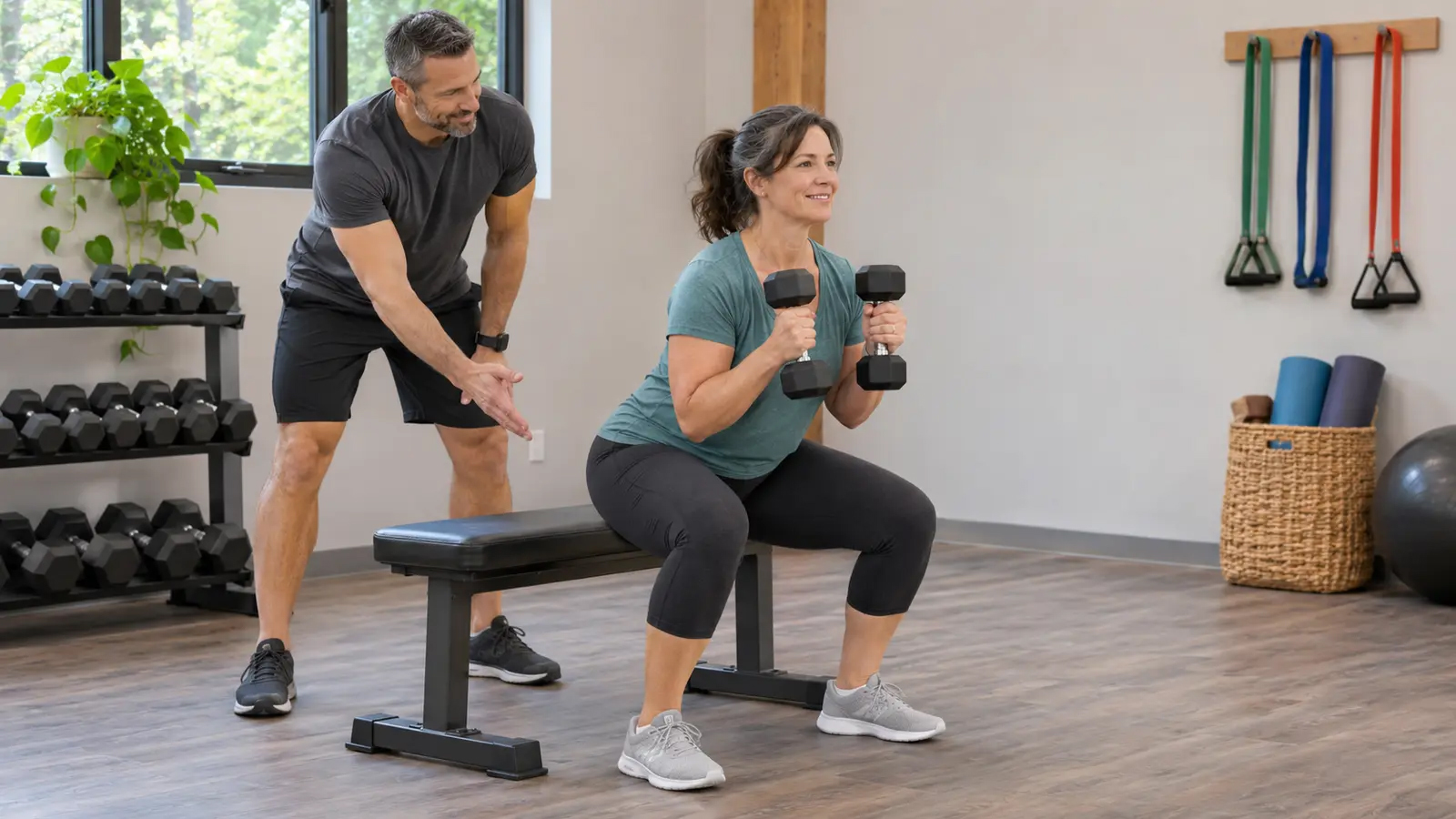
The best beginner strength plan after 40 is simple enough to repeat: two nonconsecutive full-body sessions, a small group of stable exercises, and gradual progression based on technique and recovery.
You do not need a six-day split or a long list of corrective drills to begin strength training after 40. You need a plan you can understand, recover from, and perform often enough to improve. Two full-body workouts per week provide that foundation for many beginners.
This sample plan is general education, not an individualized prescription. If you have chest pain, unexplained shortness of breath, dizziness, a recent surgery, an unstable medical condition, or symptoms that worsen with activity, speak with a qualified healthcare professional before beginning.
The two-day beginner strength plan
Train on nonconsecutive days, such as Monday and Thursday. Start each session with five to ten minutes of comfortable movement, then practice the first exercise with a light load. Rest long enough between sets to repeat good technique, usually about one to two minutes for beginner-level work.
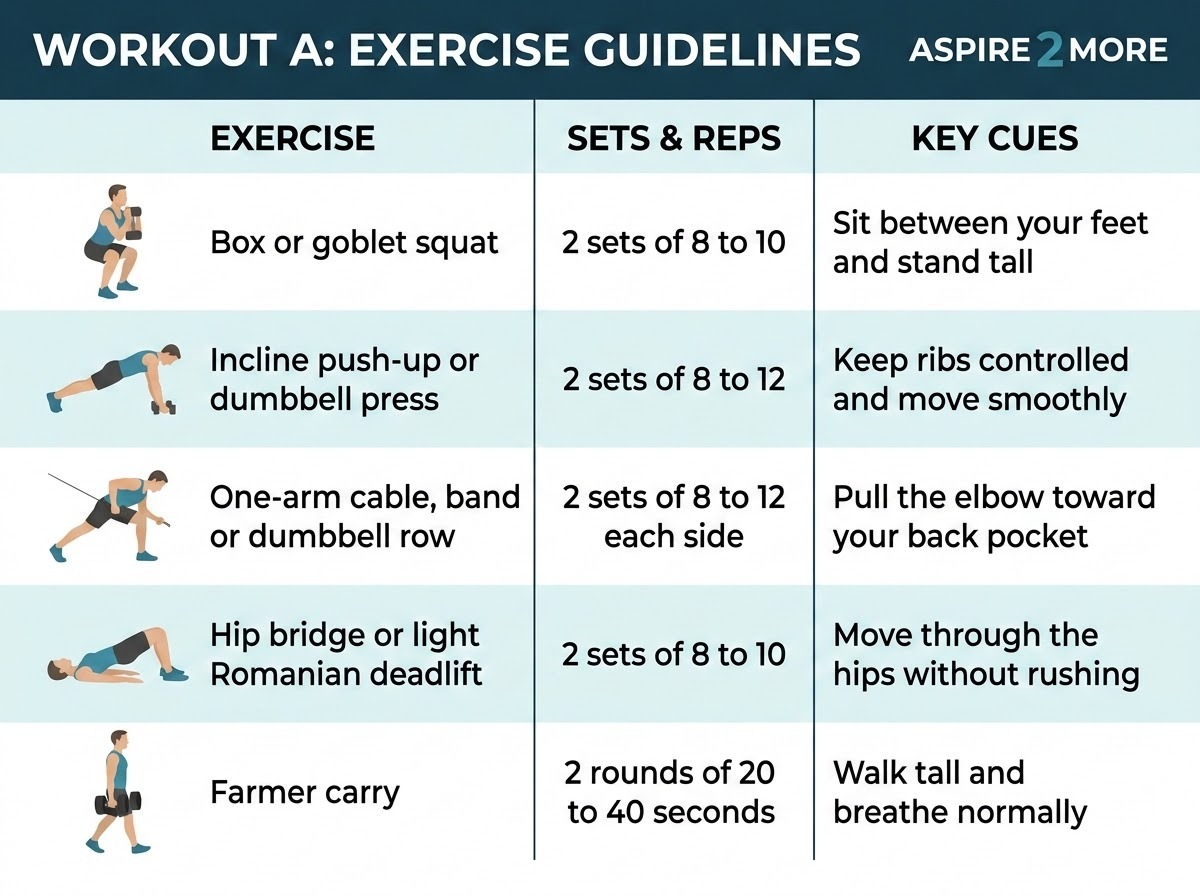
Workout A
- Box or goblet squat: 2 sets of 8 to 10 (Key cue: Sit between your feet and stand tall)
- Incline push-up or dumbbell press: 2 sets of 8 to 12 (Key cue: Keep ribs controlled and move smoothly)
- One-arm cable, band or dumbbell row: 2 sets of 8 to 12 each side (Key cue: Pull the elbow toward your back pocket)
- Hip bridge or light Romanian deadlift: 2 sets of 8 to 10 (Key cue: Move through the hips without rushing)
- Farmer carry: 2 rounds of 20 to 40 seconds (Key cue: Walk tall and breathe normally)
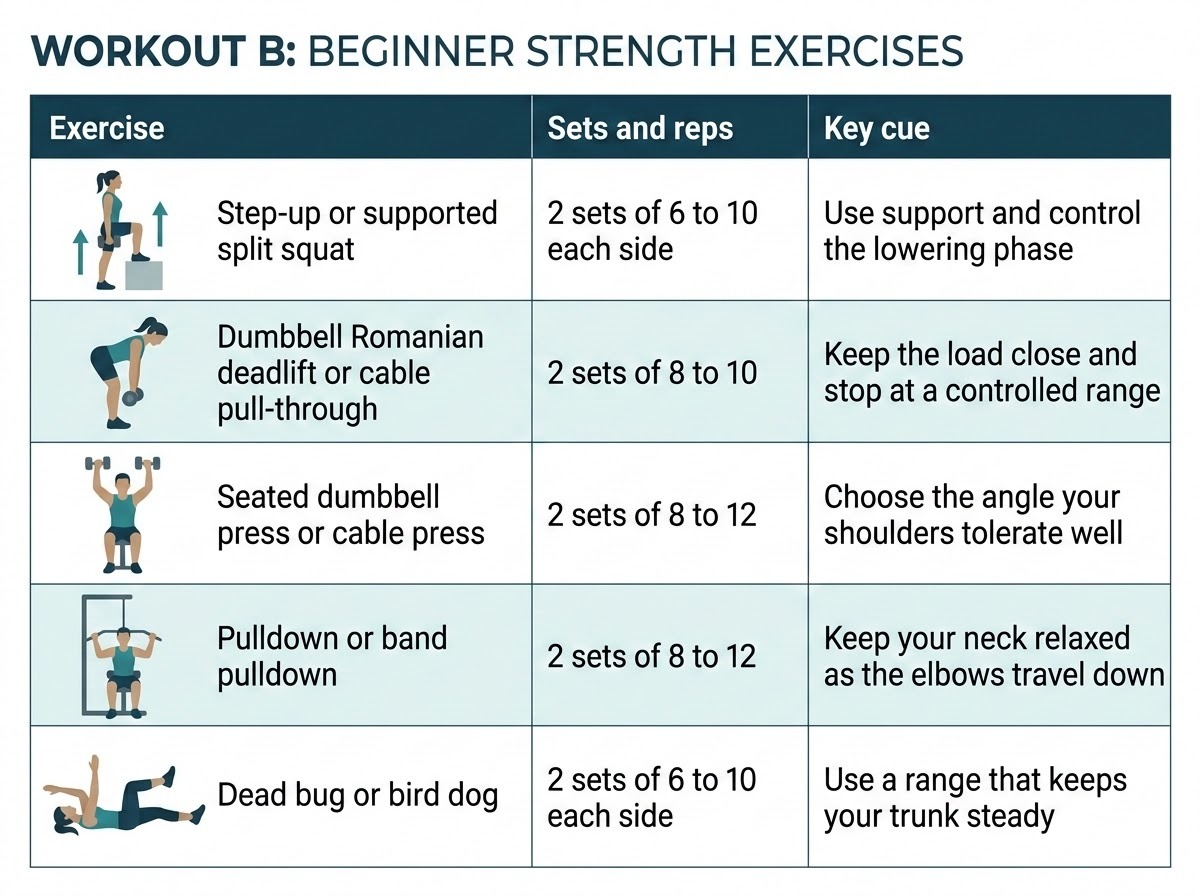
Workout B
- Step-up or supported split squat: 2 sets of 6 to 10 each side (Key cue: Use support and control the lowering phase)
- Dumbbell Romanian deadlift or cable pull-through: 2 sets of 8 to 10 (Key cue: Keep the load close and stop at a controlled range)
- Seated dumbbell press or cable press: 2 sets of 8 to 12 (Key cue: Choose the angle your shoulders tolerate well)
- Pulldown or band pulldown: 2 sets of 8 to 12 (Key cue: Keep your neck relaxed as the elbows travel down)
- Dead bug or bird dog: 2 sets of 6 to 10 each side (Key cue: Use a range that keeps your trunk steady)
How hard should the first month feel
Finish most early sets with two to four good repetitions still available. The final repetition should require attention, but it should not change the movement into a different exercise. This gives you room to learn while your muscles, tendons, and joints adapt to regular loading.
Mild muscle soreness can happen, especially in the first two weeks. Sharp pain, spreading numbness, joint pain that changes your movement, or symptoms that keep worsening are reasons to stop and seek appropriate evaluation.
A six-week progression plan
- Weeks 1 and 2: Training focus: Learn the movements. Progression: Use light to moderate loads and stop with 3 to 4 repetitions in reserve.
- Weeks 3 and 4: Training focus: Repeat and refine. Progression: Add one or two repetitions where technique remains stable.
- Weeks 5 and 6: Training focus: Increase one variable. Progression: Add the smallest load increment or one set to selected exercises, not both.
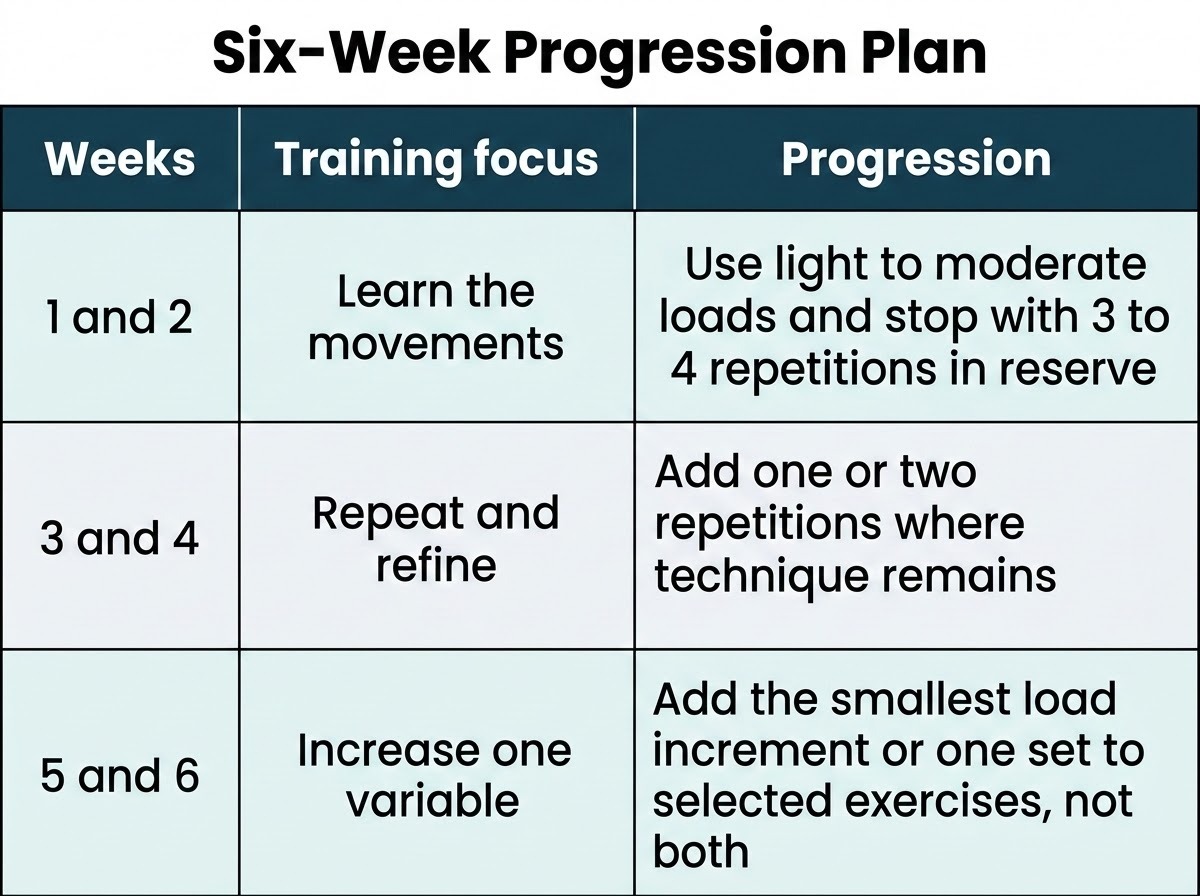
After six weeks, review the log. If you are completing the top of the repetition range with stable form and recovering by the next session, add a small amount of weight. If technique is inconsistent or soreness lasts several days, keep the load steady and improve the quality of the repetitions first.
Home and gym substitutions
- Squat: Gym option: Leg press or goblet squat | Home option: Chair squat or backpack squat
- Push: Gym option: Machine or dumbbell press | Home option: Wall or counter push-up
- Pull: Gym option: Cable row or pulldown | Home option: Anchored resistance-band row
- Hinge: Gym option: Dumbbell Romanian deadlift | Home option: Hip bridge or backpack hinge
- Carry or trunk: Gym option: Farmer carry or Pallof press | Home option: Suitcase hold, dead bug or bird dog
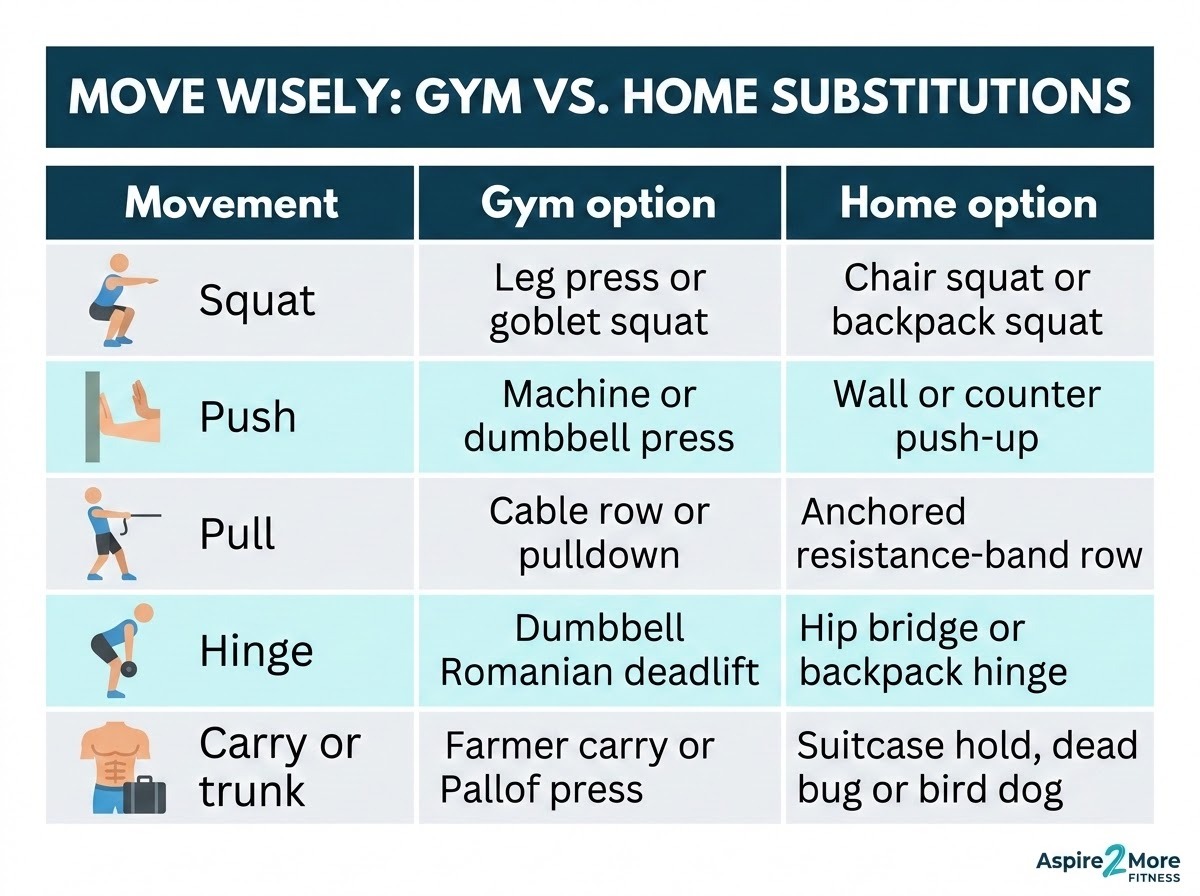
Bands, dumbbells, body weight, and machines can all build strength. Equipment is less important than a movement you can load gradually and perform consistently.
Where cardio and mobility fit
Strength training works best as part of a broader activity plan. Federal guidelines recommend 150 to 300 minutes of moderate aerobic activity each week for adults, along with muscle-strengthening activity on at least two days. You do not need to reach the full target immediately. Short walks, cycling, swimming, or other activities you enjoy can be accumulated gradually.
Mobility work should support the exercises and activities you want to perform. A brief warm-up that moves the hips, ankles, shoulders, and upper back through comfortable ranges is often more useful than a long routine that prevents you from starting the workout.
The beginner mistakes that stall progress
- Adding weight before the current load is controlled.
- Replacing the entire routine every time a new workout appears online.
- Skipping lower-body or pulling movements because they feel less familiar.
- Starting with so much volume that the second workout never happens.
- Treating warm-up exercises as a substitute for the main strength work.
- Trying to train through persistent or escalating pain.
Build a plan around your actual starting point
Aspire 2 More Fitness provides personalized coaching in private gyms in Arvada and Golden, plus virtual options. A coach can adjust the movement, range, and load to fit your experience instead of asking you to fit a generic template.
The Strength Foundations module is coming soon. Join the training-module waitlist for updates, or schedule a Fit Call to talk through your goals and the kind of support you need.
Frequently asked questions
Is two days of strength training enough after 40?
Two full-body sessions can produce meaningful progress, especially for a beginner. Consistency and gradual progression matter more than adding extra days you cannot sustain.
Should a beginner use machines or free weights?
Both can work. Machines may simplify setup, while dumbbells and bands offer flexibility. Choose the option that feels stable, lets you train the target muscles, and can be progressed.
How long should a beginner strength workout take?
Most people can complete this plan in about 40 to 60 minutes, including a brief warm-up. Longer is not automatically better.
Can I do cardio on the days between lifting?
Yes. Comfortable aerobic activity can support health and work capacity. Start with an amount you recover from and increase it gradually.
Keep reading
More practical answers.
You do not need a perfect starting point. You need the right first step.
A free Fit Call to talk through your goals, history and the best way to start.